About 68 minutes
The Cocoanut: With reference to its products and cultivation in the Philippines — A Closer Reading
Plants Soil
15,636 recorded words. 36 minutes difference from this book's estimate.
View Gutenberg source #33844
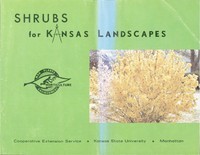
The source record for Shrubs for Kansas Landscapes — Themes and Context measures this digital text at 7,341 words, 32 min estimated reading time, and 2 detected text sections.
The text analysis averages about 26.7 words per sentence, while the detected sections provide another way to judge how the source is divided.
Project Gutenberg metadata also associates the work with “Shrubs -- Kansas,” connecting these edition facts with the source record’s subject description.
Explore this collection
These alternatives are selected using recorded categories and estimated reading time.
About 68 minutes
Plants Soil
15,636 recorded words. 36 minutes difference from this book's estimate.
View Gutenberg source #33844About 80 minutes
Plants Soil
18,392 recorded words. 48 minutes difference from this book's estimate.
View Gutenberg source #72529About 118 minutes
Plants Soil
27,096 recorded words. 86 minutes difference from this book's estimate.
View Gutenberg source #57123Search stored excerpts and compare books → Choose by your preferences →
Choices use stored catalog measurements. Estimates vary with reading speed. A shared category is a catalog label, not a claim that two books have the same argument or literary quality.
Search reads excerpt text stored with this catalog and links to its associated Gutenberg record. The connection is stored in the site database; this tool does not recheck that every excerpt is word-for-word identical to that external record. Excerpt search does not cover every chapter and does not verify historical publication dates.
Catalog snapshot checked: 2026-09-26. Coverage: 100 public books, 100 available source excerpts.
Calculated from edition completeness, EPUB availability, text structure and catalogue metadata. Not a user rating.
Total of 100 points, scaled to a 2.5-5.0 range. Editions with an empty description or a missing EPUB file are not scored.
Public-domain source text
The source text is kept in the dedicated reader, separate from this catalogue record and its commentary.
Gary L. McDaniel’s Shrubs for Kansas Landscapes opens with a direct, instructional tone: “Use this bulletin when selecting shrubs for particular locations in your yard.” The voice is that of an extension specialist offering practical, site-specific advice rather than general gardening lore. The text immediately establishes a framework of purpose—accent, border, screen, ground cover—and then moves into a systematic catalog of plants. The language is concise, avoiding ornamental flourish, and the structure relies heavily on tables that compress height, spread, hardiness, and exposure into a glanceable format. This editorial note examines how McDaniel’s prose and organization shape a reader’s experience of the work as a reference tool rather than a narrative.
McDaniel’s sentences often function as commands or recommendations, positioning the reader as an active decision-maker. Phrases like “Consider each plant for its intended use, site location, and exposure” and “Select shrubs that will provide accent for your entryway” treat the reader as a planner who must weigh multiple factors. The author rarely uses passive constructions; instead, he issues guidance in the imperative mood. This voice is consistent with the bulletin’s origin as a Cooperative Extension Service publication, where the goal is to equip homeowners with actionable knowledge. The text does not describe landscapes in the abstract but instructs how to build them.
The most striking structural feature is the transition from prose to tables. Early sections on uses and accent planting are written in paragraphs, but the bulk of the text consists of tables listing deciduous shrubs by size category. Each row gives botanical name, common name, height, spread, and codes for hardiness and exposure. The pace shifts abruptly from discursive explanation to dense data. Readers must switch from following a linear argument to scanning rows for specific plants. This change mirrors the bulletin’s dual purpose: to explain principles and then to serve as a field reference. The tables compress information that would otherwise require lengthy descriptions, making the guide practical for nursery visits.
Throughout the tables, McDaniel uses a shorthand of codes: “X, P” for exposure, “Hardy” or “NC, P” for hardiness. These abbreviations recur in every row, creating a consistent visual language. The categories themselves—Accent, Border, Screen, etc.—are repeated from the opening list, reinforcing the functional lens. Notably, the author acknowledges limitations: “All shrubs that will grow in the various sections of Kansas are not listed.” This honest admission tempers the guide’s authority and reminds readers that the selection is representative, not exhaustive. The recurring emphasis on site-specificity (“for particular locations in your yard”) and the repeated mention of nursery catalogs ground the text in real-world procurement.
McDaniel’s guide rewards a nonlinear reading: start with the prose sections for design principles, then jump to the tables for plant specifics. The brevity of the text—7,341 words—belies its density. Readers should note that the tables omit bloom color and fall foliage details, which may require supplementary sources. The author’s voice remains consistently practical, never straying into aesthetic praise. For those using this bulletin, a highlighter and a nursery catalog will be more useful than a comfortable chair.
The rain kept me indoors that day, and McDaniel’s tables of shrubs—each height, each soil need—felt like a quiet, patient ordering of the world. Later, flipping pages, I landed on an old guide to British fruits. No reason, really, just the same pleasure in precise naming. British Pomology Or, the History, Description, Classification, and Synonymes, of the Fruits and Fruit Trees of Great Britain — Edition Insights felt like another rainy afternoon, already half-remembered.
Capture what you thought, learned, and would like to remember.