About 716 minutes
The cherries of New York — Reading Companion
Plants Soil
164,508 recorded words. 183 minutes difference from this book's estimate.
View Gutenberg source #46327
This digital edition of British Pomology Or, the History, Description, Classification, and Synonymes, of the Fruits and Fruit Trees of Great Britain — Edition Insights is described by source-level measurements including 122,569 words, 8 hr 53 min estimated reading time, and 29 detected text sections.
The text analysis averages about 17.4 words per sentence, while the detected sections provide another way to judge how the source is divided.
Project Gutenberg metadata also associates the work with “Apples,” connecting these edition facts with the source record’s subject description.
Explore this collection
These alternatives are selected using recorded categories and estimated reading time.
About 716 minutes
Plants Soil
164,508 recorded words. 183 minutes difference from this book's estimate.
View Gutenberg source #46327About 134 minutes
Plants Soil
30,781 recorded words. 399 minutes difference from this book's estimate.
View Gutenberg source #61643About 118 minutes
Plants Soil
27,096 recorded words. 415 minutes difference from this book's estimate.
View Gutenberg source #57123Search stored excerpts and compare books → Choose by your preferences →
Choices use stored catalog measurements. Estimates vary with reading speed. A shared category is a catalog label, not a claim that two books have the same argument or literary quality.
Search reads excerpt text stored with this catalog and links to its associated Gutenberg record. The connection is stored in the site database; this tool does not recheck that every excerpt is word-for-word identical to that external record. Excerpt search does not cover every chapter and does not verify historical publication dates.
Catalog snapshot checked: 2026-09-26. Coverage: 100 public books, 100 available source excerpts.
Calculated from edition completeness, EPUB availability, text structure and catalogue metadata. Not a user rating.
Total of 100 points, scaled to a 2.5-5.0 range. Editions with an empty description or a missing EPUB file are not scored.
Public-domain source text
The source text is kept in the dedicated reader, separate from this catalogue record and its commentary.
Robert Hogg's British Pomology opens with a lament: 'it is much to be regretted, that of late years, so little attention has been given in this country, to the study of pomology.' This complaint sets the tone for a work that is as much a plea for scientific rigor as it is a catalogue of apples. Hogg dedicates the volume to Robert Thompson, acknowledging his 'unwearied labors in determining and arranging pomological nomenclature,' and immediately establishes a tension between the messy reality of fruit naming and the ideal of a stable, authoritative system.
The excerpts show Hogg navigating this tension through meticulous cross-referencing. For each variety, he lists multiple synonyms—'Nonsuch, Fors. Treat. 116. Rog. Fr. Cult. 36. Down. Fr. Amer. 91. Langton Nonsuch'—and often questions whether a given name truly matches its historical referent. When describing the Nonesuch, he notes that earlier authors like Rea and Worlidge mention it as 'a long keeper,' a trait his own specimen lacks, leading him to doubt its identity. This cautious, evidence-based approach defines the work's voice.
Hogg's primary concern is the chaos of apple naming. Each entry in British Pomology is a small battle against confusion. For the Nonpareil, he lists over a dozen synonyms, including 'Old Nonpariel,' 'Hunt’s Nonpareil,' 'Lovedon’s Pippin,' and 'Reinette Nonpareil.' He does not simply compile these; he evaluates them, noting which are likely misapplied. The entry for the New York Pippin reveals his honesty: 'Never having seen or met with this apple, I have here given Mr. Lindley’s descriptions verbatim.' This admission underscores the limits of his firsthand knowledge and his reliance on trusted authorities.
The structure of each entry—Identification, Synonymes, Figure, then a physical description—reflects a systematic method. Yet Hogg's prose is not dry. He observes that the Nonesuch 'sometimes happens with this as it does with Hubbard’s Pearmain, that smooth fruit grow upon one branch and russety ones upon another,' a detail that hints at the variability within a single tree. Such observations ground the taxonomic project in the unpredictable behavior of living plants.
Hogg's descriptions are remarkably precise, focusing on measurable and observable traits. For the Nonesuch, he records: 'Fruit, medium sized, two inches and a half wide, and two inches and a quarter high; roundish-oblate.' He notes the skin's color, the eye's condition ('small and closed, set in a wide, shallow, and even basin'), and the stalk's insertion. The flesh is 'white, tender, juicy, sugary and slightly perfumed.' This level of detail allows readers to identify varieties with confidence, but it also reveals Hogg's belief that apples can be known through their physical particulars.
He also attends to cultivation: the Nonesuch 'is a free grower, attaining about the middle size, and is an abundant, and early bearer.' For the Nonpareil, he advises that it 'prefers a light and warm soil, succeeds well on the paradise stock, and is well adapted for growing in pots.' These practical notes bridge the gap between the pomologist's study and the gardener's orchard. Hogg's voice is that of a careful observer who values both the tree's behavior and the fruit's appearance.
Hogg frequently invokes earlier authorities—Rea, Worlidge, Ray, Lindley—but he does not accept their claims uncritically. In the Nonesuch entry, he quotes Rea: 'it is a middle sized, round, and red striped apple, of a delicate taste, and long lasting.' Yet Hogg's own specimen does not keep long, leading him to conclude that 'I do not think this is the Nonesuch, of Rea, Worlidge, or Ray.' This skepticism is a hallmark of his method. He treats historical sources as data to be tested against present observation, not as infallible records.
The dedication to Robert Thompson and the mention of 'Dr. Diel and Professor Van Mons' place Hogg within a European network of pomologists. He acknowledges the 'vast collection of fruits which once existed in the Society’s garden' and the 'great undertaking of determining and arranging the nomenclature' accomplished by the Horticultural Society of London. Yet the work also carries a note of loss: that collection is described in the past tense, and Hogg's preface regrets the decline of pomological study. His book is thus both a monument to past achievements and a bid to revive a fading science.
Readers approaching British Pomology should treat it not as a simple reference but as a layered historical document. Hogg's entries are conversations with earlier pomologists, and his doubts about identifications remind us that apple names are not fixed. The book rewards those who read across entries, noticing how Hogg's criteria for description and his judgments of quality reveal the values of mid-nineteenth-century horticulture. Pay attention to the synonym lists: they map the movement of varieties across borders and through time. And note the moments when Hogg admits uncertainty—these are where the living complexity of the orchard breaks through the grid of classification.
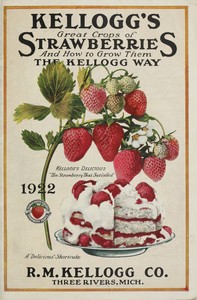
Sometimes I think about Hogg’s apples, all those precise names for fruit that no one grows anymore, and how he tried to hold tradition still under his pencil. It made me remember the quiet patience in Kellogg's Great Crops of Strawberries, and How to Grow Them the Kellogg Way — Key Ideas to Explore, the same care given to something small and perishable. That feeling stayed with me, gentle and a little sad.
Answer a few questions and save a private reflection on this device.