About 68 minutes
The Cocoanut: With reference to its products and cultivation in the Philippines — A Closer Reading
Plants Soil
15,636 recorded words. 12 minutes difference from this book's estimate.
View Gutenberg source #33844
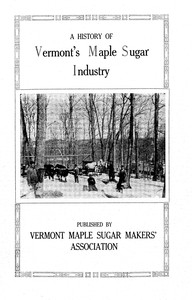
The source record for A history of Vermont's maple sugar industry — Themes and Context measures this digital text at 18,392 words, 1 hr 20 min estimated reading time, and 22 detected text sections.
The text analysis averages about 22.9 words per sentence, while the detected sections provide another way to judge how the source is divided.
Project Gutenberg metadata also associates the work with “Arboriculture,” connecting these edition facts with the source record’s subject description.
Explore this collection
These alternatives are selected using recorded categories and estimated reading time.
About 68 minutes
Plants Soil
15,636 recorded words. 12 minutes difference from this book's estimate.
View Gutenberg source #33844About 118 minutes
Plants Soil
27,096 recorded words. 38 minutes difference from this book's estimate.
View Gutenberg source #57123About 32 minutes
Plants Soil
7,341 recorded words. 48 minutes difference from this book's estimate.
View Gutenberg source #62234Search stored excerpts and compare books → Choose by your preferences →
Choices use stored catalog measurements. Estimates vary with reading speed. A shared category is a catalog label, not a claim that two books have the same argument or literary quality.
Search reads excerpt text stored with this catalog and links to its associated Gutenberg record. The connection is stored in the site database; this tool does not recheck that every excerpt is word-for-word identical to that external record. Excerpt search does not cover every chapter and does not verify historical publication dates.
Catalog snapshot checked: 2026-09-26. Coverage: 100 public books, 100 available source excerpts.
Calculated from edition completeness, EPUB availability, text structure and catalogue metadata. Not a user rating.
Total of 100 points, scaled to a 2.5-5.0 range. Editions with an empty description or a missing EPUB file are not scored.
Public-domain source text
The source text is kept in the dedicated reader, separate from this catalogue record and its commentary.
This 1912 volume, issued by the Vermont Maple Sugar Makers’ Association, is as much a promotional and protective tract as it is a history. It opens by declaring Vermont the “home of the sugar maple,” then immediately warns that the tree is being driven back by clearing, maple worms, and veneer mills—a lament that frames the book’s dual purpose: to celebrate the industry and to defend it against adulteration and decline. The catalog subjects list only “Arboriculture; Maple sugar,” but the excerpts reveal a work equally concerned with food purity, cooperative marketing, and even poetry (Will Carleton contributes verse). Readers should expect a hybrid text: part boosterish chronicle, part technical manual, part consumer guide.
The book’s subtitle promises a history “from the Indian down to the Present Time,” and the excerpts do touch on Indigenous methods, though the treatment is brief and framed by the association’s own narrative of progress. Far more space is given to the association itself, founded in 1893 to “improve the quality and increase the quantity” of maple products and to combat fraud. The text explains that the association issues a protected label to members who agree to use it only on pure goods of standard quality; misuse is “prosecuted to the full extent of the law.” This legalistic language contrasts with the lyrical opening about maple’s “beauty and luxury of foliage,” showing how the book shifts between reverence and regulation.
A striking passage addresses consumer suspicion that modern Vermont maple syrup is adulterated because it is “so much whiter than formerly.” The association’s response is technical: whiteness depends on speed of processing. “Were it possible to convert sap to sugar without any lapse of time or exposure to the air the product would be perfectly white.” This detail reveals that the industry was already grappling with public mistrust—and that the association saw education as key. The text also specifies that syrup should weigh “eleven pounds net to the gallon,” a concrete standard for purity. The excerpts do not include the recipes promised on the title page, but the emphasis on measurable quality suggests a manual-like precision in those sections.
Despite its promotional tone, the book candidly enumerates threats to the maple industry. The “maple worm” stripped trees for several years, and “worst of all at the present time are the veneer mills, which pay large prices for maple logs.” Earlier, settlers burned maple for fuel and charcoal, and boiled wood ashes into potash—a practice the text calls “killing the goose that laid the golden egg.” This recurring metaphor of self-destructive resource use gives the history a cautionary edge. The excerpts do not reveal whether the association’s conservation efforts succeeded, but the text’s own evidence suggests that the industry’s survival was uncertain even as the book promoted it.
Because the excerpts are incomplete—they break off before the recipes and the list of member producers—readers should treat the book as a period artifact that reveals more about early 20th-century food politics than about maple sugaring’s full history. The association’s dual role as historian and watchdog makes every claim about purity or tradition worth reading with attention to its promotional purpose. The poetry and boosterism are part of the argument, not mere decoration.
Reading about the slow drip of sap and the careful grading of syrup brought back a winter in my grandfather's sugarhouse, the steam sweet and thick. I felt the same quiet reverence for craft later, turning pages of The pears of New York — Context and Discussion, where each variety felt like a remembered orchard, tended and mourned. Both books hold a tenderness for things that take time to ripen.
A brief reflection can help important ideas stay with you longer.