About 864 minutes
The book of the cat — Themes and Context
Gardening
198,648 recorded words. 1 minutes difference from this book's estimate.
View Gutenberg source #76311
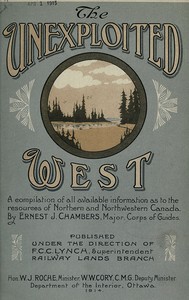
Before opening The Unexploited West A Compilation of all of the authentic information available at the present time as to the Natural Resources of the Unexploited Regions of — Story, Setting & Ideas, the edition data offers a quick orientation: 198,364 words, 14 hr 23 min estimated reading time, and 27 detected text sections.
The text analysis averages about 22.5 words per sentence, while the detected sections provide another way to judge how the source is divided.
Project Gutenberg metadata also associates the work with “Canada -- Economic conditions,” connecting these edition facts with the source record’s subject description.
Explore this collection
These alternatives are selected using recorded categories and estimated reading time.
About 864 minutes
Gardening
198,648 recorded words. 1 minutes difference from this book's estimate.
View Gutenberg source #76311About 800 minutes
Gardening
183,861 recorded words. 63 minutes difference from this book's estimate.
View Gutenberg source #9478About 777 minutes
Gardening
178,689 recorded words. 86 minutes difference from this book's estimate.
View Gutenberg source #32300Search stored excerpts and compare books → Choose by your preferences →
Choices use stored catalog measurements. Estimates vary with reading speed. A shared category is a catalog label, not a claim that two books have the same argument or literary quality.
Search reads excerpt text stored with this catalog and links to its associated Gutenberg record. The connection is stored in the site database; this tool does not recheck that every excerpt is word-for-word identical to that external record. Excerpt search does not cover every chapter and does not verify historical publication dates.
Catalog snapshot checked: 2026-09-26. Coverage: 100 public books, 100 available source excerpts.
Calculated from edition completeness, EPUB availability, text structure and catalogue metadata. Not a user rating.
Total of 100 points, scaled to a 2.5-5.0 range. Editions with an empty description or a missing EPUB file are not scored.
Public-domain source text
The source text is kept in the dedicated reader, separate from this catalogue record and its commentary.
Commissioned by the Department of the Interior in 1913, this compilation assembles reports from fur traders, explorers, missionaries, and geologists to promote settlement and investment in northern Canada. The preface frames the work as a response to the exhaustion of southern agricultural lands and a growing demand for facts about climate, soil, timber, minerals, and game. The author, Major Ernest J. Chambers, served as Gentleman Usher of the Black Rod, lending an official tone to the volume.
The text balances boosterism with empirical detail, as seen in the chapter on northern Alberta, which describes wood buffalo as the last remnant of American bison living wild, and in the account of natural gas springs on the Athabaska River, where a witness boiled tea by hanging a pail over a lighted gas vent. Such concrete observations ground the promotional aims in specific, verifiable phenomena.
The volume opens with a letter from F. C. C. Lynch, Superintendent of Railway Lands, transmitting the manuscript to the Minister of the Interior. This bureaucratic framing establishes the work as an instrument of policy, not a personal narrative. The preface explicitly counters the prevailing notion that the territory north of the North Saskatchewan is a “sterile, frost-bound waste,” arguing instead that its “latent resources” now “challenge the attention of the world.” The language is measured but purposeful, aiming to redirect immigration and capital northward.
Chambers draws on multiple source types—geological surveys, missionary accounts, sportsmen’s reports—to create an impression of comprehensive authority. Yet the compilation does not claim firsthand exploration; it is explicitly a synthesis of “all available information.” This reliance on secondhand evidence shapes the book’s tone: confident in aggregate, but occasionally vague on specifics, as when it notes that wood buffalo “formerly ranged over immense areas” but are now restricted to a few herds north of Peace River.
One of the most vivid passages describes natural gas springs on the Athabaska River. At the mouth of Little Buffalo River, gas forces up through tar sands and two hundred fifty feet of Clearwater shales, issuing in jets that burn steadily when lit, providing enough heat to cook a camp meal. A witness boiled his tea pail by hanging it over the flame. The text notes that such springs have “less value in themselves at present than in the indications they afford of the existence of petroleum beneath.”
This pragmatic assessment recurs throughout: the gas is interesting not for immediate use but as a sign of larger deposits. The book quotes R. W. Brock, Director of the Geological Survey, who states that the interior plain is underlain by sedimentary rocks containing coal, building stones, clays, and cement materials, and that “there is every indication of a large oil field in the northern portion, at least, of Alberta.” The compilation thus functions as a prospectus for future extraction, grounding its claims in observable phenomena like escaping gas bubbles in riverbanks.
The chapter on northern Alberta devotes considerable space to the wood buffalo (Bison athabascae), described as “the sole remnant, living in a natural state, of the countless millions of American bison which existed when the northwest was first opened up.” The text notes that within living memory the herds were far larger, and that they would have faced extermination without Dominion government protection. The wood buffalo is said to be the same species as the plains buffalo, descended from individuals that drifted north for pasturage.
This section blends natural history with conservation advocacy, noting the animal’s restricted range north of Peace River and its historical record by Samuel Hearne in 1772. The tone is elegiac yet practical: the buffalo’s presence makes the region “of especial interest to the naturalist and sportsman,” but the emphasis is on the government’s role in preservation. The compilation thus treats wildlife as both a resource and a heritage, reflecting the dual aims of the Department of the Interior.
Readers should approach this text as a historical document shaped by its official purpose: to attract settlers and capital to northern Canada. The compilation’s value lies not in its predictions—many of which were optimistic—but in the granular observations it preserves: the taste of tar sands, the location of gas vents, the habits of wood buffalo. For those studying early twentieth-century resource development, government propaganda, or the environmental history of the Canadian northwest, this work offers a dense, often surprising record of how the region was imagined and marketed before large-scale exploitation began.
There are winters when I recall the survey men mapping the Peace River, how their lanterns held back the dark. And then I think of Wintering Bees in Cellars — Edition Insights, a small guide to keeping another kind of colony alive through the cold. Both whisper of patient tending, of shared warmth against a long, quiet night.
Capture what you thought, learned, and would like to remember.









