About 30 minutes
Rodent Control Aided by Emergency Conservation Work — Story, Setting & Ideas
Gardening
6,790 recorded words. 2 minutes difference from this book's estimate.
View Gutenberg source #59318
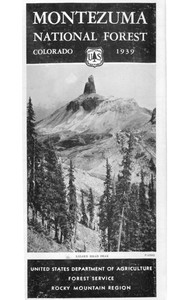
Montezuma National Forest, Colorado (1939) — Inside the Classic can be approached with a clearer sense of reading commitment from its source measurements: 7,146 words, 32 min estimated reading time, and 1 detected text section.
The text analysis averages about 17.6 words per sentence, while the detected sections provide another way to judge how the source is divided.
Project Gutenberg metadata also associates the work with “San Juan National Forest (Colo.),” connecting these edition facts with the source record’s subject description.
Explore this collection
These alternatives are selected using recorded categories and estimated reading time.
About 30 minutes
Gardening
6,790 recorded words. 2 minutes difference from this book's estimate.
View Gutenberg source #59318About 27 minutes
Gardening
6,113 recorded words. 5 minutes difference from this book's estimate.
View Gutenberg source #40157About 37 minutes
Gardening
8,510 recorded words. 5 minutes difference from this book's estimate.
View Gutenberg source #60710Search stored excerpts and compare books → Choose by your preferences →
Choices use stored catalog measurements. Estimates vary with reading speed. A shared category is a catalog label, not a claim that two books have the same argument or literary quality.
Search reads excerpt text stored with this catalog and links to its associated Gutenberg record. The connection is stored in the site database; this tool does not recheck that every excerpt is word-for-word identical to that external record. Excerpt search does not cover every chapter and does not verify historical publication dates.
Catalog snapshot checked: 2026-09-26. Coverage: 100 public books, 100 available source excerpts.
Calculated from edition completeness, EPUB availability, text structure and catalogue metadata. Not a user rating.
Total of 100 points, scaled to a 2.5-5.0 range. Editions with an empty description or a missing EPUB file are not scored.
Public-domain source text
The source text is kept in the dedicated reader, separate from this catalogue record and its commentary.
The 1939 edition of Montezuma National Forest, Colorado opens not with scenery but with a proclamation: President Theodore Roosevelt established the forest on June 15, 1905, its gross area 837,228 acres. The text immediately grounds the reader in administrative fact, then pivots to topography—the San Miguel Range, Lizard Head Peak at 13,156 feet, the Dolores River's abrupt turn north. This is a government document, yet it carries a quiet sense of place: the forest's boundaries follow the Dolores River Valley, and the San Miguel Range extends westward through the north end.
The early pages also include a brief biography of Montezuma, the ninth king of Mexico, explaining why the name suits a forest where Spanish names and customs persist. The historical section traces Spanish explorers de Rivera (1765) and Escalante (1776) through the San Juan Basin and Dolores Valley, noting that Spanish names were retained throughout the forest while English names replaced them farther north.
The opening establishes the forest as a legal and geographical entity. The proclamation date and acreage are followed by a description of topography that reads like a surveyor's notes: the San Miguel Range is “extremely rugged,” the La Plata Range “rough but slightly lower,” the southwestern part consists of “high mesas.” The Dolores River flows southwest, then makes an abrupt turn north. These details are precise, not poetic—the forest is defined by its boundaries and elevations.
The historical section that follows is equally factual. Spanish explorers de Rivera and Escalante followed routes from Santa Fe to the San Juan Basin, then north through the Dolores and San Miguel Valleys. The text notes that Spanish names were given to geographical features and retained, while English names replaced them farther north. This observation links the forest's nomenclature to colonial history without elaboration.
The middle section of the excerpts shifts abruptly to a detailed botanical catalog. Trees are grouped by type—conifers, junipers, broadleaf trees—with each species described in a formulaic style: size, bark, leaves, fruit. For example, the aspen (Populus tremuloides) has “flat, broadly oval leaves, up to 4½ inches across, that tremble characteristically in a breeze.” The narrowleaf cottonwood is “40 to 60 feet high” with leaves “¼ to 1 inch wide and 2 or 3 inches long, very similar to willow leaves.”
This section is a field guide embedded within the larger document. It does not assume prior knowledge but provides enough detail for identification: the one-seed juniper's berries are “covered with a bluish bloom which may be rubbed off exposing the true reddish or coppery color.” The language is technical but accessible, aimed at a reader who might encounter these trees on the forest floor.
Near the end of the excerpts, the tone shifts again to direct instruction. A section titled “Six Rules for Health Protection” lists imperatives: “Boil or chlorinate all suspected water,” “Burn or bury all garbage,” “Bury a foot deep all human excretions, at least 200 feet from streams, lakes, or springs.” The rules are numbered and blunt, reflecting a concern for sanitation in a wilderness setting.
These rules reveal the intended audience: campers, hikers, and forest users who might not know that mountain streams do not purify themselves in a few hundred feet. The specificity—200 feet from water, a foot deep—suggests practical experience. The text does not explain why these rules matter; it simply states them, trusting the reader to comply.
The excerpts also include the Project Gutenberg colophon, which is not part of the original 1939 text but frames the digital edition. The colophon explains copyright status, donation information, and the history of Project Gutenberg. While irrelevant to the forest itself, it reminds the reader that this is a republished work, originally produced by the U.S. Forest Service as a public document.
The original text, however, bears the marks of its era: the biography of Montezuma reflects early 20th-century historical narratives, and the tree descriptions use common names that may have shifted. The forest's area—837,228 acres—is given without context, and the proclamation by Theodore Roosevelt places the forest within the conservation movement of the early 1900s.
Reading this guide requires shifting between modes: from administrative history to botanical key to camping regulations. The excerpts do not reveal the full structure—whether the tree section continues, whether there are maps or photographs—but they show a text that serves multiple purposes. For a first reading, pay attention to how the Forest Service balances factual description with practical advice, and note the gaps: the historical narrative stops in the 18th century, and the rules assume a visitor who needs basic instruction. The forest emerges not as a landscape but as a managed space, defined by boundaries, species, and rules.
I found myself thinking about that old Forest Service guide—how it read like someone carefully noticing every tree and rule, making order from wildness. It reminded me of Profitable poultry — Inside the Classic, which lingers the same way: a quiet, patient attention to the small, practical things that make a life work. Both felt like holding a piece of someone’s steady, unhurried hands.
A brief reflection can help important ideas stay with you longer.









