About 18 minutes
Devils Postpile National Monument, California [1984] — Reading Companion
Gardening
4,017 recorded words. 2 minutes difference from this book's estimate.
View Gutenberg source #65551
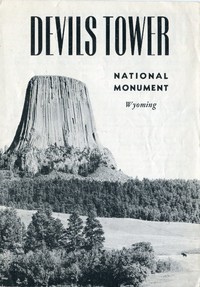
This digital edition of Devils Tower National Monument, Wyoming (1949) — Story, Setting & Ideas is described by source-level measurements including 4,437 words, 20 min estimated reading time, and 1 detected text section.
The text analysis averages about 24.7 words per sentence, while the detected sections provide another way to judge how the source is divided.
Project Gutenberg metadata also associates the work with “Devils Tower National Monument (Wyo.),” connecting these edition facts with the source record’s subject description.
Explore this collection
These alternatives are selected using recorded categories and estimated reading time.
About 18 minutes
Gardening
4,017 recorded words. 2 minutes difference from this book's estimate.
View Gutenberg source #65551About 27 minutes
Gardening
6,113 recorded words. 7 minutes difference from this book's estimate.
View Gutenberg source #40157About 30 minutes
Gardening
6,790 recorded words. 10 minutes difference from this book's estimate.
View Gutenberg source #59318Search stored excerpts and compare books → Choose by your preferences →
Choices use stored catalog measurements. Estimates vary with reading speed. A shared category is a catalog label, not a claim that two books have the same argument or literary quality.
Search reads excerpt text stored with this catalog and links to its associated Gutenberg record. The connection is stored in the site database; this tool does not recheck that every excerpt is word-for-word identical to that external record. Excerpt search does not cover every chapter and does not verify historical publication dates.
Catalog snapshot checked: 2026-09-26. Coverage: 100 public books, 100 available source excerpts.
Calculated from edition completeness, EPUB availability, text structure and catalogue metadata. Not a user rating.
Total of 100 points, scaled to a 2.5-5.0 range. Editions with an empty description or a missing EPUB file are not scored.
Public-domain source text
The source text is kept in the dedicated reader, separate from this catalogue record and its commentary.
The 1949 National Park Service guide to Devils Tower National Monument opens with a striking contradiction: the monument is both a fixed geological fact and a subject of ongoing scientific debate. The text states unequivocally that the Tower is 'an 865-foot tower of rock, serving as evidence of volcanic activity that occurred many millions of years ago,' yet later admits that 'as to the mode of origin of the Devils Tower geologists are by no means in agreement.' This tension between authoritative description and acknowledged uncertainty shapes the entire pamphlet, which oscillates between precise measurements and speculative geology.
The guide's language is notably exact when describing the Tower's dimensions: '1,280 feet from the river bed,' '865 feet from its apparent base,' a base diameter of 'approximately 1,000 feet,' and a top averaging '275 feet.' These figures convey a sense of scientific rigor. Yet the text simultaneously embraces ambiguity. The origin of the Tower is presented as a 'Geologic Mystery,' with two competing hypotheses—volcanic neck or injected sill—neither of which 'can be positively stated.' The columns' 'flare' is dismissed as 'a subject too involved for this brief account.' This selective precision suggests a deliberate rhetorical strategy: the NPS establishes credibility through hard data while honestly acknowledging the limits of geological knowledge.
The pamphlet's descriptive passages are remarkably attentive to visual detail, particularly color. Fresh rock is 'dark grey,' weathering to 'light grey with tinges of buff.' Lichens 'of various colors and shades' grow on the face, 'reflecting tones of light,' so that the Tower's appearance 'may change several times during the day.' A 'red sunset may give it a reddish glow, fading to dull purple.' This language is not merely decorative; it reflects a naturalist's habit of close observation. The text also notes the presence of 'mosses, ferns, grasses, shrubs, and sagebrush' on the top surface, along with 'mice, pack rats, and chipmunks,' and birds of prey. These details ground the monumental in the ecological, reminding the reader that the Tower is also a habitat.
Despite being a federal publication, the guide makes a single, telling reference to Indigenous nomenclature: 'Devils Tower (known to the Sioux Indian as MATEO TEPEE, meaning Grizzly Bears’ Lodge).' The capitalization of 'MATEO TEPEE' and the parenthetical framing suggest an attempt to acknowledge Native heritage while maintaining the official name. The spelling 'Sioux Indian' reflects mid-century usage, and the absence of any further discussion of Indigenous stories or significance is notable. This brief inclusion stands in contrast to the otherwise purely geological and administrative tone, hinting at a broader cultural negotiation within the text. The guide does not elaborate on the legend, leaving the reader to wonder about the stories the name implies.
The pamphlet is organized as a linear tour, moving from the monument's establishment by President Theodore Roosevelt in 1906 under the Antiquities Act, through its physical description, to the geological mystery, and then to practical information for visitors (not included in the excerpts). This structure mirrors the experience of approaching the Tower: first learning its historical significance, then observing its form, then contemplating its origins. The prose is consistently formal and impersonal, using passive constructions ('is believed,' 'has been removed,' 'cannot be positively stated'). This voice reinforces the authority of the National Park Service while also creating a sense of distance. The reader is positioned as a learner, receiving information from an expert source, rather than as an explorer discovering the site firsthand.
This guide is best read as a document of its time—a federal publication that balances scientific humility with institutional authority. The tension between precise measurement and acknowledged uncertainty, the careful visual descriptions, and the single nod to Native culture all reflect the rhetorical choices of mid-century park service writing. Readers interested in the history of American nature writing or the evolution of federal land management language will find this a revealing text.
Reading that 1949 Devils Tower guide, I kept noticing how the official geological text quietly folded in Wichita names, as if the land itself resisted tidy explanation. It reminded me of those old agricultural pamphlets, where the stubborn reality of boll weevils softened the confident prose. There's a similar tenderness in How to Prosper in Boll Weevil Territory — Context and Discussion, a humility before forces no policy can fully tame.
Use these questions to collect your thoughts before moving on.









