About 222 minutes
Peat and its Uses as Fertilizer and Fuel — Edition Insights
Gardening
50,861 recorded words. 7 minutes difference from this book's estimate.
View Gutenberg source #26142
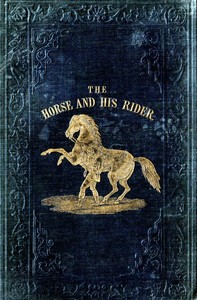
The source record for The Horse and His Rider Or, Sketches and Anecdotes of the Noble Quadruped, and of Equestrian Nations — Themes and Context measures this digital text at 52,449 words, 3 hr 49 min estimated reading time, and 13 detected text sections.
The text analysis averages about 28.3 words per sentence, while the detected sections provide another way to judge how the source is divided.
Project Gutenberg metadata also associates the work with “Horses,” connecting these edition facts with the source record’s subject description.
Explore this collection
These alternatives are selected using recorded categories and estimated reading time.
About 222 minutes
Gardening
50,861 recorded words. 7 minutes difference from this book's estimate.
View Gutenberg source #26142About 221 minutes
Gardening
50,659 recorded words. 8 minutes difference from this book's estimate.
View Gutenberg source #67942About 218 minutes
Gardening
50,009 recorded words. 11 minutes difference from this book's estimate.
View Gutenberg source #57116Search stored excerpts and compare books → Choose by your preferences →
Choices use stored catalog measurements. Estimates vary with reading speed. A shared category is a catalog label, not a claim that two books have the same argument or literary quality.
Search reads excerpt text stored with this catalog and links to its associated Gutenberg record. The connection is stored in the site database; this tool does not recheck that every excerpt is word-for-word identical to that external record. Excerpt search does not cover every chapter and does not verify historical publication dates.
Catalog snapshot checked: 2026-09-26. Coverage: 100 public books, 100 available source excerpts.
Calculated from edition completeness, EPUB availability, text structure and catalogue metadata. Not a user rating.
Total of 100 points, scaled to a 2.5-5.0 range. Editions with an empty description or a missing EPUB file are not scored.
Public-domain source text
The source text is kept in the dedicated reader, separate from this catalogue record and its commentary.
Rollo Springfield opens The Horse and His Rider by declaring the domestication of the horse 'the greatest acquisition from the animal world ever made by the art and industry of man,' a claim he supports with a sweeping historical argument: without the horse, human societies would have remained 'rude and wretched,' unable to communicate rapidly or unite for peace and order. The author positions himself as both a naturalist and a moralist, lamenting that 'there has been little gratitude or humanity evinced in our general treatment of the horse' even as he celebrates its contributions to civilization.
Springfield's method is to blend natural history with anecdote and travelogue. The table of contents reveals a structure that moves from general topics—domestication, physiognomy, vices, speed—to specific equestrian nations: Mongols, Cossacks, Circassians, Mamelukes, and the horse cultures of Arabia and America. This design allows him to shift between scientific description and vivid, often dramatic, storytelling.
Springfield's prose is marked by a formal, eighteenth-century cadence and a tendency toward moral elevation. He describes the horse as a 'generous servant' and frames its domestication as a providential gift, quoting Genesis to underscore man's dominion. This diction aligns him with Buffon, whom he cites approvingly, and with a broader tradition of natural theology. Yet his language also carries a note of anxiety: the advent of steam travel, he suggests, threatens to make men 'still more undervaluing his worth.' The author's choice of words—'graceful symmetry,' 'noble creature,' 'barbarian forefathers'—reveals a writer who sees the horse not merely as a utility but as a moral index of civilization.
One of the most detailed passages describes the tabunshick, the Russian steppe horse-herder. Springfield inventories his equipment with ethnographic precision: a harabnick (a whip with a thong 'fifteen or eighteen feet in length'), a sling used like a lasso, and a wolf club with a 'thick iron knob' that can strike a wolf at full gallop. The author notes that the tabunshick must carry water, bread, and brandy, as he may be 'for days without coming to a well.' The life is so arduous that 'the average life of a tabunshick is extremely short'—ten to fifteen years—and the work is done by freemen, not serfs, because 'no serf could be impelled by any dread of punishment to exert that constant vigilance.' Springfield uses concrete detail to convey the physical and economic realities of this vocation, including the risk of theft: 'every horse that is lost the tabunshick must pay for.'
Springfield's narrative voice is that of an informed observer who has gathered material from travel accounts and natural histories. He does not claim firsthand experience but writes with the authority of a compiler, often using phrases like 'it is considered a settled point' or 'it rarely happens.' This distanced perspective allows him to present the steppe as a theater of extreme behavior: the tabunshick becomes 'the wildest dare-devils that can be imagined,' and a man who has cared for horses for two or three years is 'unfit for any quiet, or settled kind of life.' The author's tone is one of fascinated disapproval—he admires the skill and endurance while noting the moral and physical costs. This tension between admiration and caution runs through the book, as Springfield balances his celebration of equestrian cultures with a civilizational critique.
The book's structure is cumulative rather than argumentative. Each chapter groups related topics: Chapter I covers domestication, breeds, and 'horse furniture'; Chapter II addresses physiognomy and sagacity through anecdotes; Chapter III catalogs vices; Chapter IV discusses speed, endurance, and even horseflesh as food. The later chapters shift to geographical surveys—the steppes, the Mongols, the Cossacks, the Circassians, the Mamelukes—and include a story, 'Bela—A Story of the Caucasus.' This arrangement suggests that Springfield intended the work as both a natural history and a travel anthology. The anecdotal method is central: he uses brief narratives to illustrate points about horse intelligence, fidelity, or danger, often without explicit analysis. The reader is left to infer the broader significance from the accumulation of examples.
Readers approaching The Horse and His Rider should expect a work that moves fluidly between natural history, moral essay, and travel narrative. Springfield's prose rewards attention to its rhetorical flourishes and its quiet judgments about human and animal nature. The excerpts suggest that the book is less a systematic treatise than a collection of sketches held together by a common subject and a consistent authorial voice. Those interested in the cultural history of the horse, or in nineteenth-century popular natural history, will find here a rich, if occasionally digressive, source.
There’s something steadying about Springfield’s old belief that the horse carried our better instincts—patience, loyalty, a kind of quiet gravity. I found myself thinking of that while wandering through the quieter corners of The Airedale — Story, Setting & Ideas, where that same unhurried devotion seems to linger, just beneath the surface of the page. A comforting echo, really.
A brief reflection can help important ideas stay with you longer.









