
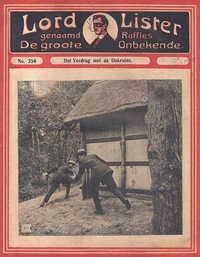
Lord Lister No. 0356: Het verdrag met de Oekraïne by Theo von Blankensee et al.
Let's set the scene: Europe in the early 20th century, a continent of empires and uneasy alliances. Into this world steps Lord Lister, not a noble statesman, but a brilliant and daring thief. His latest target isn't a jewel or a painting, but something far more explosive—a secret treaty between powerful nations concerning Ukraine.
The Story
The plot kicks off when Lord Lister, always on the hunt for a valuable prize, gets wind of this hidden document. The treaty could redraw borders and ignite conflicts, making it the most dangerous item he's ever pursued. What follows is a classic cat-and-mouse game. Lister uses his wit, disguise skills, and network of contacts to track down the treaty, while various government agents and rival factions try to stop him. It's less about brute force and more about outsmarting everyone in the room. The story moves from smoky backrooms to grand estates, full of narrow escapes and last-minute twists. You're never quite sure if Lister is a hero playing a dangerous game for the greater good, or just a spectacularly ambitious criminal who's bitten off more than he can chew.
Why You Should Read It
This isn't just a simple adventure. Reading it feels like uncovering a time capsule. You get the thrilling escapades you'd expect, but you also see the political anxieties of the era reflected in its pages. The 'Ukrainian question' was a real point of tension, and it's fascinating to see it used as a backdrop for a pulp novel. Lord Lister himself is a great character—smooth, confident, and always two steps ahead. He's the prototype for so many charming anti-heroes that came later. The writing is direct and propulsive, meant to entertain first and foremost. It doesn't get bogged down in complexity, which makes it a refreshingly quick read.
Final Verdict
This book is a treat for a specific kind of reader. It's perfect for history buffs who enjoy seeing real-world tensions fuel fictional plots, or for fans of classic adventure series who want to explore their European roots. If you love early detective stories, gentleman thieves like Arsène Lupin, or just have a curiosity for the stranger corners of literary history, you'll find a lot to enjoy here. It's not a deeply philosophical work, but it is a genuinely fun and historically intriguing piece of popular fiction. Think of it as a short, exciting vacation to the world of 1910s pulp adventure.
You are viewing a work that belongs to the global public domain. Access is open to everyone around the world.
Mary White
1 year agoIt took me a while to process the complex ideas here, but it addresses the common misconceptions in a very professional manner. A rare gem in a sea of mediocre content.
Jessica Davis
9 months agoThe clarity of the introduction set high expectations, and the step-by-step breakdown of the methodology is extremely helpful for students. It definitely lives up to the reputation of the publisher.
Jackson Davis
1 year agoThanks for the recommendation.






Jessica Thomas
3 weeks agoI found the data interpretation to be highly professional and unbiased.