
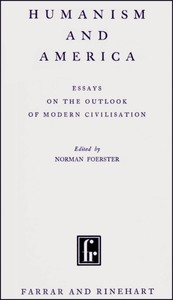
Humanism and America : Essays on the outlook of modern civilisation by Foerster
Let's clear something up first: this isn't a novel with a plot. 'Humanism and America' is a time capsule. It's a series of essays from 1930, compiled by scholar Norman Foerster, where a group of intellectuals—philosophers, critics, poets—duke it out over the direction of modern life. The 'story' is the clash of ideas itself.
The Story
Picture America between the world wars. Everything is changing fast—cars, radios, movies, new art styles like modernism. This book captures a moment when a bunch of thinkers hit the pause button and asked: 'Is this good?' The 'Humanists' in the title (people like Irving Babbitt and Paul Elmer More) argued that modern culture was becoming unmoored. They thought we were throwing out timeless ideas about beauty, ethics, and human nature in our rush toward scientific progress and personal expression. Other contributors pushed back, defending the new and the experimental. The book is their battlefield. There's no single narrator, just a chorus of urgent, sometimes angry, voices trying to define what a good and meaningful civilization should look like.
Why You Should Read It
Here's the wild thing: their 1930s crisis feels incredibly familiar. Swap out 'radio' for 'social media' and 'modernist poetry' for whatever new art form confuses us today, and the debate is the same. Are we connected or just lonely? Informed or overwhelmed? The essays are dense, I won't lie. You have to read them slowly. But there's a thrill in seeing smart people grapple with the same unease we feel now. It makes our own cultural anxieties feel less like a unique modern burden and more like part of a long conversation. It's also a bit humbling—many of their worst fears about shallow culture and lost wisdom feel... pretty on point.
Final Verdict
This is not a beach read. It's for the curious reader who likes to think about how we think. Perfect for history buffs who want to understand the intellectual mood of the early 20th century, or for anyone today who feels skeptical about the relentless drumbeat of 'newer is better.' If you enjoy podcasts or articles about technology's impact on society, ethics, or the meaning of art, this is the deep, old-school source material. It's challenging, often dated in its references, but strangely comforting. It proves that asking 'what are we even doing?' is not a new question, and the search for answers is always worth your time.
This content is free to share and distribute. Use this text in your own projects freely.
William White
1 month agoUnlike many other resources I've purchased before, it manages to maintain a consistent flow even when discussing difficult topics. I'm glad I chose this over the other alternatives.
Jessica Taylor
1 year agoIt’s rare to find such a well-structured narrative nowadays, the way the author breaks down the core concepts is remarkably clear. A solid investment for anyone's personal development.
Charles Brown
1 year agoI started reading out of curiosity and the arguments are well-supported by credible references. I couldn't put it down.
Richard Harris
5 months agoGood quality content.




Joseph Garcia
1 year agoThe analytical framework presented is both innovative and robust.